


What are varicose veins (VV)?
Blood flows in the veins of the legs from bottom to top, overcoming gravity.Van helps them with this.For various reasons, the valve apparatus can malfunction and blood flow is interrupted.After that, blood begins to stagnate in the veins, leading to dilation of the vein walls and the formation of nodes.
Signs of varicose veins
Veins twist and protrude above the skin's surface
foot pain
heavy in the legs
burning sensation along the veins
night cramps
varicose veins
skin pigmentation and thickening
Causes of varicose veins
Who gets varicose veins most often?
Of the 100% of people with varicose veins, 30% are women in adulthood, 50% have given birth and 25% are men over 40 years old.Moreover, the risk of disease arises after twenty years.However, despite such sad statistics, there are still quite simple effective ways to prevent varicose veins that we want to talk about.First, let's list some causes of varicose veins that will help determine whether you are at risk or not.

Hereditary
The first and most important factor leading to varicose veins is genetics.In 70% of cases, the disease is transmitted from mother to daughter.So, try to find out if your grandmother and mother had varicose veins, maybe even someone had surgery for this disease.If you exhibit a genetic predisposition to this disease, you should think seriously before choosing a career as a hairdresser, teacher or flight attendant.
Working conditions
In fact, the second risk factor is prolonged standing, as well as sedentary and physically demanding work.
Hormonal changes
The next danger point can be hormonal changes in the body (such as taking certain hormonal drugs).Hormonal changes and increased body weight also negatively affect the functioning of the valve apparatus.This may be why pregnant women are at particular risk.
Overheating frequently
High ambient temperatures can also lead to varicose veins - this becomes an additional burden on the veins.Therefore, taking too hot a bath, sauna and being exposed to the sun for more than 40 minutes is undesirable.

Shoes are not comfortable
You're also at risk if you regularly wear high heels (although completely flat soles aren't good for your feet either).High heels cause constant tension in the muscles and increase the load on the veins in the legs.A heel of 5 cm or more is considered high, and 2-3 cm is optimal.One last thing worth mentioning is smoking.It's hard to say exactly how many cigarettes you smoke at risk, but there is definitely a link between varicose veins and smoking.
How to treat varicose veins
Don't delay treating varicose veins.Seeing a doctor promptly will help detect signs of varicose veins in the early stages.There are several modern methods for examining varicose veins, most of which are completely painless and safe.This is mainly an ultrasound examination (Dopplerography).It shows the condition of the veins, the volume of circulating blood and the speed of circulation.
Preventing varicose veins at home is not too difficult, but for prevention to be effective, most of the doctor's advice must become a habit.

Sports
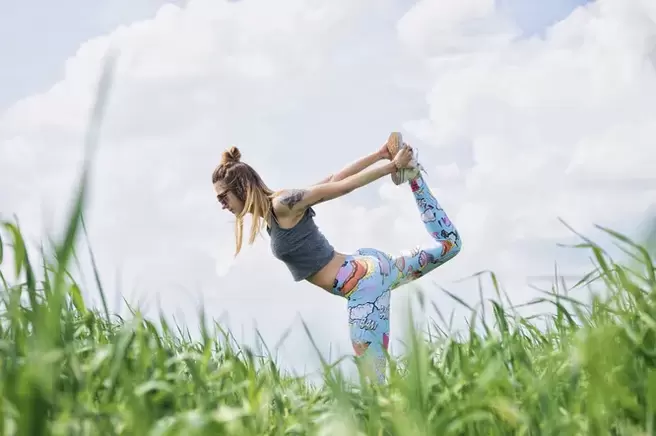
The first thing that all doctors advise without exception is exercise.It's better to choose a sport where your leg muscles contract evenly and strongly.Walking, jogging, cycling, skiing, horseback riding, dancing are good for your feet.Don't forget: whatever sport you choose, your shoes should be roomy and comfortable.The best sport for people with varicose veins is swimming: there is no pressure on the veins, they are as if weightless.A very reasonable but effective way of prevention is to walk.Even fifteen minutes a day will bring positive results.

If you choose to exercise at the gym, follow some basic rules:
Prioritize exercises without weights or with minimal weight (maximum 1 kg).
Increase the number of repetitions, not the weight of the bullet.
Perform exercises on specific muscle groups at different times and alternate work days with rest days.
Wherever you exercise, do not overdo it - the load will be useful when it brings pleasure, and strength will be useful to you to do more pleasant things.When choosing a sport, remember that not every load is suitable for varicose veins.
Tennis, bodybuilding, volleyball and ice skating are not good for varicose veins - sports that require sudden movements.Not only are they not useful, they are even harmful to health.Even if you don't have time to exercise regularly, don't despair.
There are simple exercises for your legs that don't require much effort but are a great way to improve blood circulation.
Exercise is especially recommended for people who, due to their profession, are forced to spend a lot of time sitting or standing.Walk by rolling your feet from heel to toe.Then stand on tiptoes 20-30 times.Do a few squats, during which you shift your weight to the sides of your feet.
If you have to sit a lot, you can sometimes stretch your legs like this: lift your knees and move your legs back and forth, turning your feet clockwise and then back.Then bend and straighten your fingers until you feel a slight stretch.Change your position more often and try to get rid of the habit of sitting cross-legged - this will compress the veins and thereby reduce blood circulation.
Take care of your feet
We are used to paying special attention to our faces, but our feet also need care.Rinse them up to the ankles with cold water from the shower for a few minutes in the morning.It is desirable that the flow be stronger.
Several times a week, it is recommended to apply a mud mask to your feet for 20 minutes.Rinse the mask with cool water then apply cream.These procedures reduce swelling, improve nutrition and blood circulation.After applying the mask, your legs must be elevated.
Try to make it a habit - when relaxing, watching TV, it is better to keep your legs in an elevated position.Ideally, they will be located above the level of the heart.Doctors advise placing a pillow under your feet even at night.

Among folk remedies, there is a time-tested method for preventing varicose veins.Take a thick wooden block (regular wax candles are fine), place one foot on the chair and gently press it on the skin, rolling from foot to knee.Do the exercises with the second leg.This exercise is very useful for strengthening blood vessels.You can help your feet relax after a hard day with just a simple massage.Massage each toe, using your foot to roll a rubber ball—a “hedgehog”—on the floor.Even a few minutes of such exercise will completely restore blood circulation.
Watch your diet
Nutrition should be reasonable, because, as already mentioned, weight changes negatively affect the condition of the legs.Basic rule: maximum vegetables and fruits, minimum salty, fatty and smoked foods.Try to replace animal fats with vegetable fats as they contain acids that help improve blood flow.Eat more fiber - its benefits are proven by the fact that in Eastern countries, where fiber is the main food, varicose veins practically do not occur.Large amounts of fatty, fried and spicy foods change the composition of the blood, which can lead to the formation of blood clots.Alcohol also has a negative effect on the veins.

Also, try to eat foods that contain vitamin P. These are mainly walnuts, green tea and rose hips.Foods such as sprouted wheat, peas, beans, and green onions will enrich the veins with nutrients and make them more elastic.
If possible, you should limit coffee consumption to one cup per day, because this drink is not harmful to blood vessels.
Dress properly
High heels, as well as tight shoes, put pressure on the feet or legs, which has a negative effect on the condition of the veins.Save narrow heels for formal occasions and for everyday choose roomy shoes with small heels.If you notice symptoms of varicose veins, it is better to avoid wearing tight clothes, especially socks with tight elastic bands.
For the prevention and treatment of varicose veins, doctors recommend wearing special compression hosiery.This creates pressure on the veins from the outside, thanks to which the amount of blood stagnation is reduced and the normal size of the veins is maintained.Previously, people used elastic bandages to achieve the same effect, but fortunately, the days of unattractive bandaged legs have passed, and today compression therapy uses socks and tights that have a massaging effect.Such products are much more convenient and practical without spoiling the appearance.They look like regular women's tights or knee socks, but they are very tight in some places.
It is recommended to put on elastic socks in the morning without getting out of bed, raising your legs to an angle of forty degrees.
At that time, the socks will be able to keep the veins in a physiological state and ensure blood flow to the heart.Such products are sold in pharmacies and are intended for use for at least six months.
It is worth adding above that varicose veins are not only a cosmetic problem but also a dangerous disease that, if ignored, can lead to complications.Therefore, you should seek professional help at the first suspicions, the beauty of healthy legs will be a pleasant addition to your good health.